
It said the tests were carried out against high-speed unmanned aerial targets under different interception scenarios.

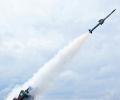
India has successfully conducted maiden flight tests of an integrated air defence weapon system (IADWS) off the coast of Odisha. The system includes quick reaction surface-to-air missiles, very short range air defence system (VSHORADS) missiles, and a high power laser based directed energy weapons (DEW) system.

Clearances include next-gen air defence, anti-tank missiles, anti-drone systems, loitering munitions, and naval UAVs.
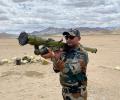
The new supplies of the Igla-S air defence missiles have been received by the Indian Army a couple of weeks ago and are being provided to the forward formations for taking care of the threat from enemy fighter aircraft, choppers and drones on the borders.

'DRDO has been directed to license missile technologies to the private sector.'

On both the occasions, the missiles intercepted the simulated targets with pinpoint accuracy. The missiles were tested for minimum and maximum range.
'There are only a few countries in the world that have deployed combat-ready laser systems.'

Low-level lightweight radars; very short-range air defence systems (launchers and missiles); remotely piloted aerial vehicles; loitering munitions, including vertical take-off and landing systems; different kinds of drones; bullet-proof vests; ballistic helmets; quick-reaction fighting vehicles -- heavy and medium; and night sights for rifles (aiming devices that are visible in low light).

The statement by IRGC which was televised on the country's state media, came, three days after Haniyeh was killed at his accommodation in northern Tehran following his attendance at the inaugural ceremony of Iran's new president Masoud Pezeshkian.

A lesson for India is to clearly define objectives beforehand, so that the adversary or other parties do not attempt to mitigate them midway.

India has successfully conducted the maiden salvo launch of the indigenously developed Naval Anti-Ship Missile-Short Range.

Glimpses from Vayu Shakti 2026 highlight India's aerial might and combat readiness. From sonic booms to precision strikes, the Indian Air Force showcased its full-spectrum capabilities over Rajasthan skies.

India successfully test-fired two Pralay missiles in quick succession off the coast of Odisha, paving the way for its induction into the military. The missile is indigenously developed and features a state-of-the-art navigation system.

Lakshya was flown as a support system to gauge the precision control of the short range missile.

The VSHORADS missile is meant for neutralising low altitude aerial threats at short ranges.

India is looking for a VSHORAD system to replace its ageing system from Russia and would be sourcing more than 5000 missiles and 1200 launchers.
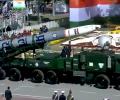
India showcased its indigenous short-range tactical missile Pralay for the first time at the Republic Day parade on Sunday. The missile, developed by the Defence Research and Development Organisation (DRDO), is capable of carrying a nuclear warhead and has a range of 150 to 500 kms. The parade featured an array of other indigenously built missiles, surveillance systems, and weapon systems, reflecting India's growing military prowess. The DRDO displayed its latest innovations for national security, including the quick reaction surface-to-air missile, airborne early warning and control system, and drone detect, deter and destroy system.
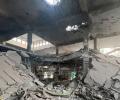
Under Mission Sudarshan Chakra, the country's national security shield is to be expanded by 2035 to ensure comprehensive protection of both strategic and civilian critical infrastructure.

India successfully test-fired nuclear-capable short range ballistic missiles Prithvi-II and Agni-I from an integrated test range off the Odisha coast, demonstrating its strategic deterrence capability. The test-firing of the missiles, conducted by the elite Strategic Forces Command, validated all operational and technical parameters.
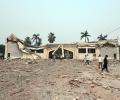
'We won not (only) because we were able to carry out long-range precision strikes.' 'That is, of course, one of the reasons but we had better situational awareness about what's happening than Pakistan.'
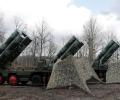
Sources said the equipment is being brought to India through both sea and air routes.

'Some success has been achieved in raising the costs of terrorism for Pakistan.'

Delhi must now purge the delusional hopes of being a 'counterweight' to China in the US calculus, argues Ambassador M K Bhadrakumar.

China has also announced that it would hold six live-fire military drills in waters around Taiwan.

AI reduces the time taken to find a target and launch a strike. This has led to a major increase in the pace of the conflict, with one report mentioning nearly 900 strikes launched on Iranian targets in the first 12 hours of an operation.
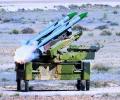
'When one air force (India's) hits the other's airbases with impunity and that air force (Pakistan's) is not able to respond, then the air force, which has put the other's airbases out of commission, has won.'
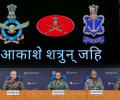
The Indian Air Force on Monday said all its military bases and systems continue to remain fully operational, and ready to undertake any further missions if the need arises.

A total of nine procurement proposals were approved by the Defence Acquisition Council headed by Defence Minister Rajnath Singh, officials said.

'Pakistan's is the only military-controlled nuclear weapons programme in the world.' 'As people get radicalised, the risk of a brigadier or pilot taking matters into their own hands is a real concern.'
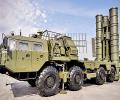
"The first squadron is being deployed in the Punjab sector. The batteries of the first squadron would be capable of taking care of aerial threats from both Pakistan and China," government sources told ANI.

'Strikes into the Gulf countries are proof that the security guarantees offered by the US are ineffective and that the Gulf countries cannot rely on American security assurances for their safety.'

Trump has made it clear: the US will not lift its blockade of Iranian ports until a deal is signed.

China displayed a range of new weapons at a military parade, including laser weapons, nuclear ballistic missiles, giant underwater drones, and fifth-generation aircraft.
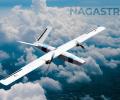
The foremost lesson for India today is to beef up its air defence to cater for multiple drone attacks. As seen in Operation Sindoor, we have come a long way, but there's room for getting better. We must develop a robust and almost impregnable air cover over ourselves, asserts IAF veteran Air Commodore Nitin Sathe (retd).

The Akash weapon system, which will be deployed facing the western borders, employs command to line of sight guidance and relies on sophisticated radars and control systems to guide the missile to its targets.

After Operation Sindoor, the Army and Navy now view the IAF as not a supporting arm, but the spearhead of India's warfighting capability, capable of decisive outcomes across domains, explains Air Commodore Nitin Sathe (retd).

The missile showcased its precision and capability to neutralise targets, the statement said.

The 'rescue' operation occurred within kilometres of Iran's underground tunnel complex at Isfahan, assessed by the IAEA and US intelligence as holding a substantial portion of the country's 60 per cent enriched uranium stockpile. Retired senior US military officers have highlighted that the mission's footprint -- hundreds of special operators, multiple heavy-lift aircraft deep inside Iran -- appears outsized for recovering a single airman. Prem Panicker continues his must read blog on the Iran War.

The VL-SRSAM, which DRDO developed for the Indian Navy, was fired from a warship at a high-speed aerial target mimicking incoming enemy aircraft.
'This operation was a culmination of such long (period) of efforts, and gives us satisfaction that whatever we have been doing, we have been doing correctly'
